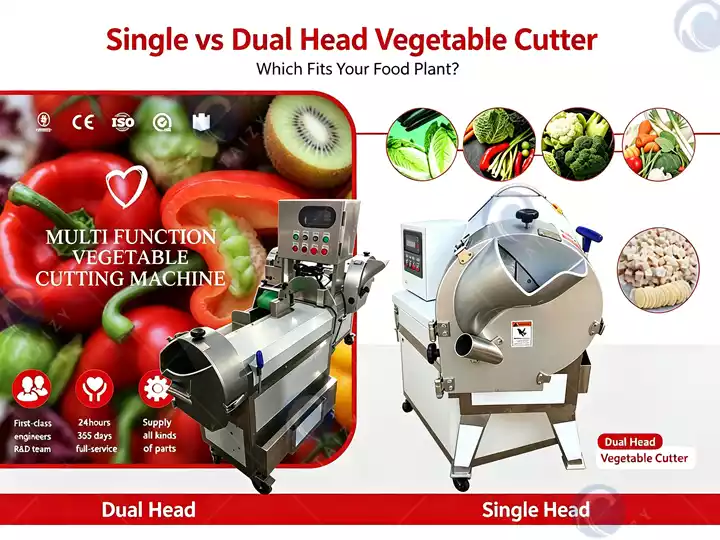
Vegetable cutting is the most fundamental and time-consuming step in food preprocessing. For central kitchens, pre-made food factories, and catering processing plants, choosing between single and dual head vegetable cutter equipment directly impacts production efficiency, labor costs, and finished product consistency.
Many plant owners struggle with equipment selection: a basic single-head cutter is affordable but limited in function, while upgraded dual-station equipment delivers higher flexibility and output.
This article compares single and double-head vegetable cutting machines in detail, helping you pick the right machine for your production scale. Meanwhile, a professional dual head vegetable cutter solves most high-volume vegetable processing pain points for modern food plants.
Basic working principle of two vegetable cutters
The core difference lies in structural design and working modes, which determines their processing capacity and application range.
- Single head vegetable cutter: Equipped with one independent cutting station. It can only process one type of vegetable and one cutting mode at a time. Workers need to replace blades and adjust parameters frequently to switch processing types.
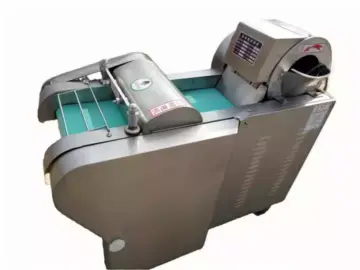
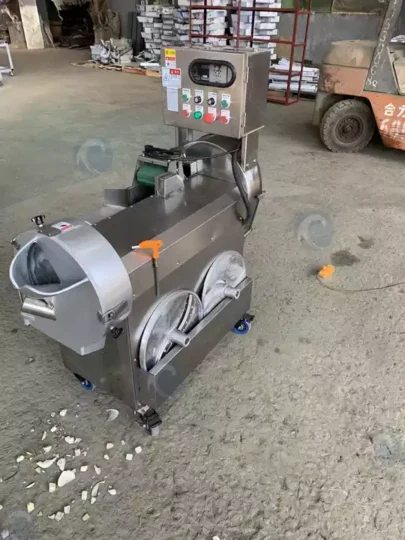
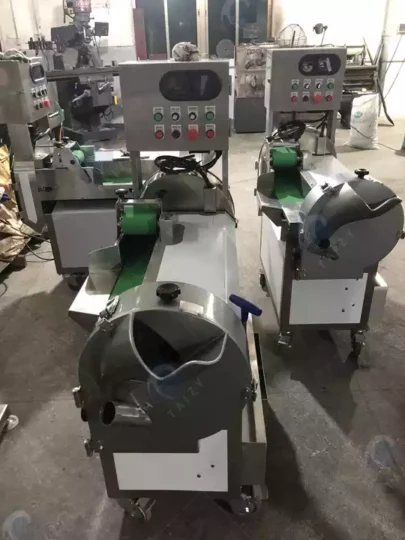
- Dual head vegetable cutter: Features two separate and independent working stations. The two stations can run individually or simultaneously, supporting mixed processing of different vegetables in one single machine.
Core advantages of dual head vegetable cutter
A high-performance dual head vegetable cutter is specially optimized for diversified and high-volume food preprocessing, with obvious advantages over single-head models.
- Dual-scene compatible processing: One station handles leafy vegetables like cabbage, celery and chives for segment cutting (1–60 mm). The other station processes root vegetables such as potatoes, carrots and radishes for slicing, shredding and dicing (2–20 mm).
- Higher production efficiency: The overall capacity reaches 600–1000 kg/h, far exceeding the output of ordinary single-head cutters. It avoids repeated shutdowns for blade replacement and parameter adjustment.
- Save labor and time cost: Dual synchronous working reduces manual operation frequency. One worker can complete mixed vegetable cutting work that originally requires two sets of equipment.
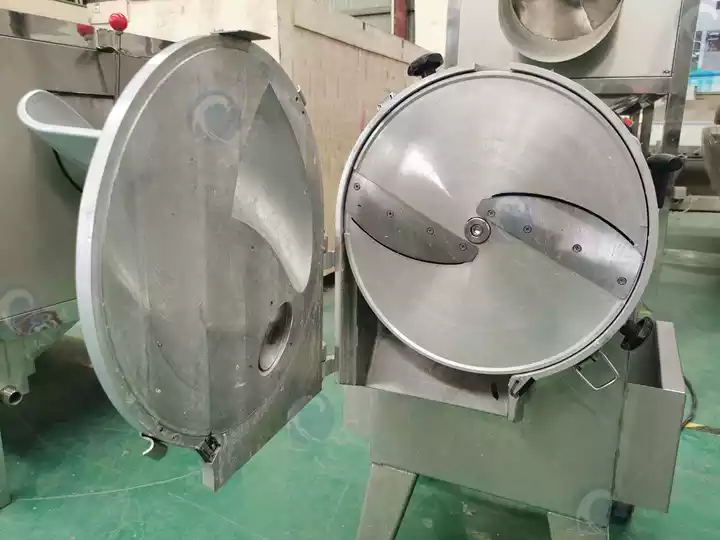
- Uniform cutting effect: Adopts stable conveyor pressing feeding and high-speed rotary cutting, ensuring consistent vegetable size with minimal waste.
Single head vegetable cutter pros and cons
Single-head vegetable cutters still have market value for small-scale production scenarios.
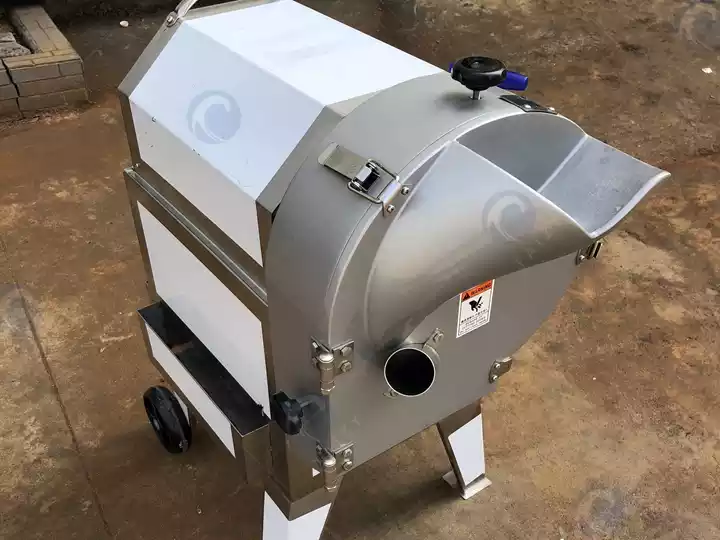
- Advantages: Low price, compact structure, small floor space, simple operation and low maintenance cost. Ideal for small canteens and small catering shops with low daily processing volume.
- Disadvantages: Single function, low output, frequent mode switching, unable to process leafy and root vegetables at the same time, restricting large-scale production expansion.

Key selection criteria for food plants
You can make a targeted choice according to your daily output, processing types and production mode.
- Choose single head cutter if: Your daily vegetable processing volume is below 300kg, with single vegetable types and limited workshop budget.
- Choose dual head vegetable cutter if: You need to process both leafy and root vegetables, pursue high hourly output, and require stable and standardized cutting effects for pre-made food and batch production.
Conclusión
Single-head vegetable cutters are cost-effective for small and simple processing demands. However, with the upgrading of the food processing industry, diversified and high-efficiency production has become the mainstream trend.
For most commercial food plants, central kitchens and pre-made food factories, the dual head vegetable cutter is a more cost-efficient long-term investment. It integrates multiple functions, improves equipment utilization, and greatly optimizes the overall vegetable preprocessing workflow.