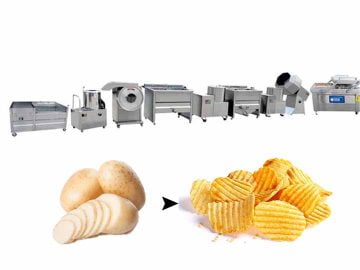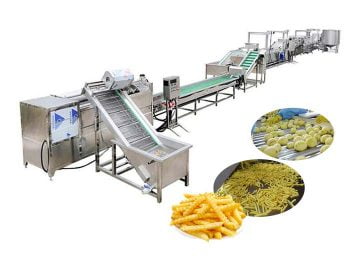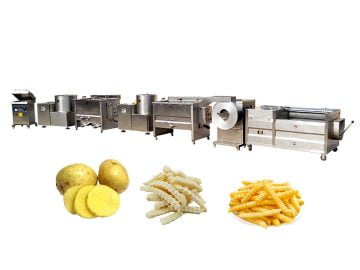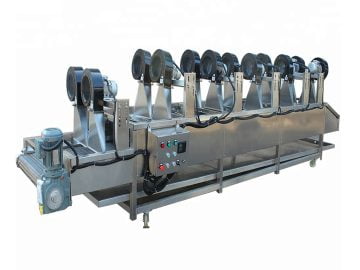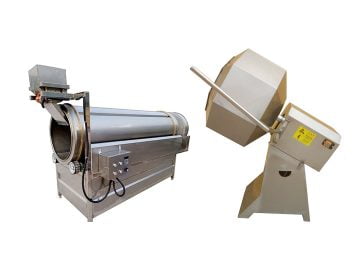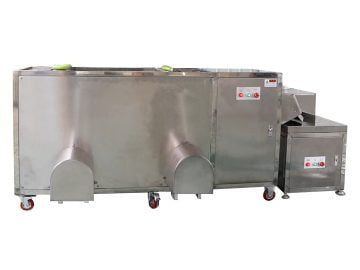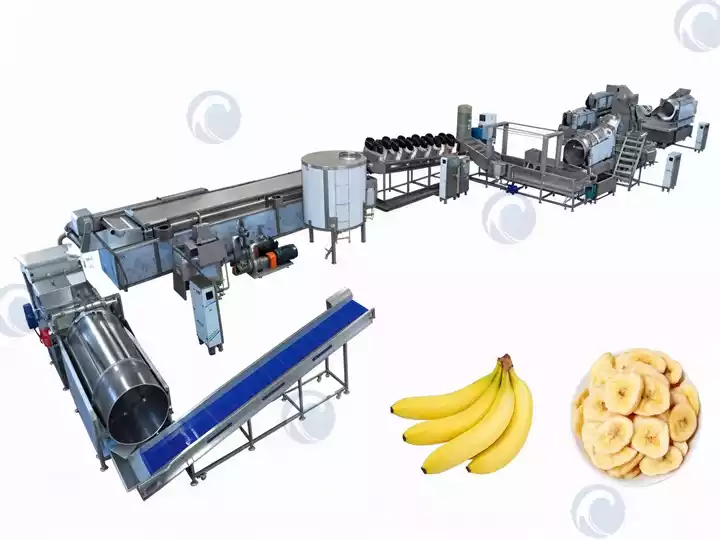
If you run a snack factory, your banana chips manufacturing line is key to stable production. Many producers chase high output but ignore temperature control. Small temperature changes in pre-treatment, drying, frying and cooling directly affect banana chips’ color and shelf life.
How temperature changes banana chips color?
Bananas are rich in polyphenols and sugars. Browning reactions start right after slicing, and temperature is the main trigger.
- Too low: Moisture cannot evaporate quickly. Active enzymes remain, making chips turn uneven grey or dark brown.
- Too high: Fast caramelization creates burnt spots and bitter flavor. Color varies widely between batches.
- Proper stable heat: A well-calibrated banana chips manufacturing line stops excess browning and controls the Maillard reaction, delivering consistent golden-yellow chips.
- This rule applies to both fried and non-fried products.
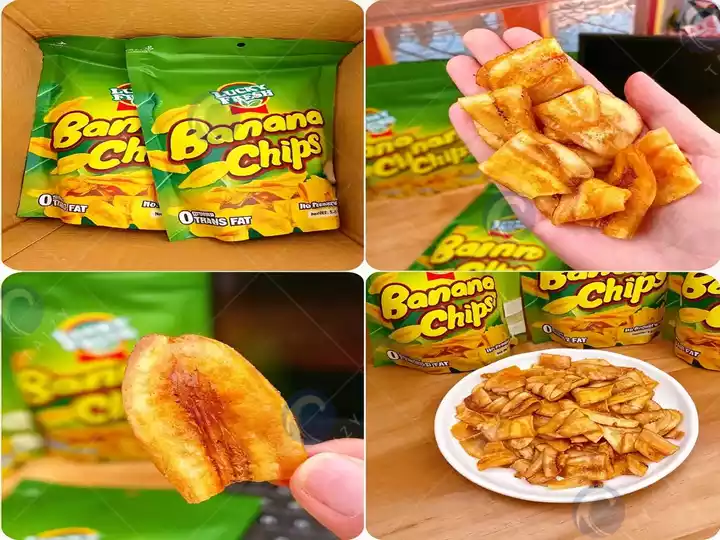
How temperature impacts shelf life?
Shelf life depends on residual moisture, microbes and oil oxidation, all linked to heating and cooling on the banana chips manufacturing line.
- Uneven heating leaves hidden moisture inside slices, which encourages mold growth. Overheating speeds up oil rancidity, especially for fried banana chips.
- Chips must be fully cooled before packing. Hot sealed chips create condensation inside bags and turn soft quickly.
- Precise temperature control keeps water activity within a safe range, preserving crispness without extra preservatives.
Fried vs non-fried: different temperature settings
- Vacuum fried: 80–110°C under vacuum. Gentle heat protects color and slows oil oxidation. Temperature spikes will darken chips fast.
- Hot-air drying (non-fried): Use gradual staged heating. Quick temperature rises crack slices and trap internal moisture.
A flexible banana chips manufacturing line uses independent PID controllers for blanching, drying/frying and cooling. Operators can adjust parameters based on banana ripeness and slice thickness.
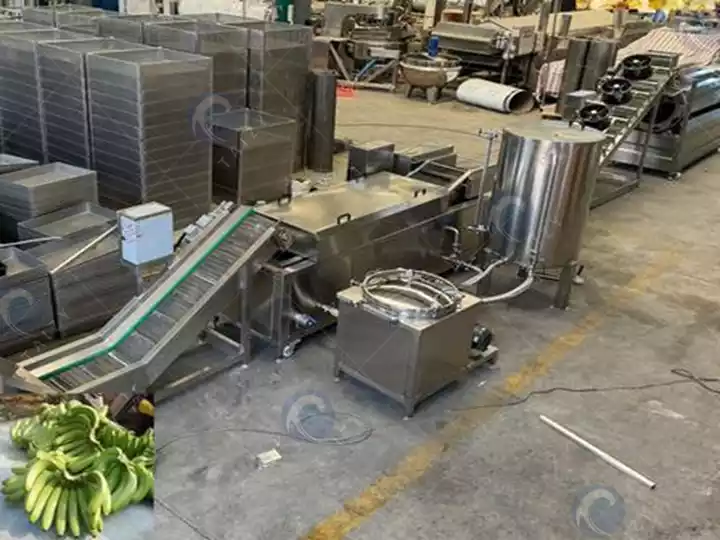
Common temperature mistakes
- Skip preheating, leading to patchy color in the first batch
- Raise temperature blindly for higher speed, resulting in burnt surfaces with wet centers
- Pack hot chips without cooling
- Use one fixed temperature for all bananas and slice sizes
- Forget regular calibration of temperature sensors
Practical tips for banana chips manufacturing line
- Preheat all heating zones for 10–15 minutes before production
- Lower the temperature and extend heating time for thicker slices
- Maintain stable blanching temperature to prevent early browning
- Fully cool chips in the cooling tunnel before packaging
- Calibrate sensors regularly and save separate recipes for fried and non-fried banana chips
Final words
Precise temperature control is critical for banana chip production. A high-quality banana chips production line with zoned temperature control helps you maintain uniform color, reduce waste and extend shelf life. Stable quality makes it easier to work with distributors and overseas buyers.
Contact us if you need an automatic banana chips manufacturing line with reliable temperature control and professional process support.